
Po polsku: Kaplica „na wodzie” św. Józefa Robotnika w Ojcowie
What do you do when the Tsar forbids you to build a church on your land? In Ojców, half an hour from Kraków, people found a clever answer: they built it on the water. The little wooden Chapel of St Joseph the Worker stands right over the Prądnik stream, and it’s one of my favourite small surprises in Ojców National Park.
The story: a ban from the Tsar
At the turn of the 20th century Ojców was in the part of Poland ruled by Russia. Ojców was a popular spa back then, with a hydrotherapy resort, and the visitors wanted a place to pray. According to local tradition, Tsar Nicholas II had banned building churches „on Ojców soil”. So in 1901 the locals took the order literally. They turned the old spa bathhouse that stood over the stream into a chapel, resting on both banks of the Prądnik. Technically, it wasn’t on the land at all.
The idea came from Dr Stanisław Niedzielski, the director of the local hydrotherapy resort. Historians argue about how much of the story is true, but I love it anyway: it’s a very Polish way of dealing with an occupier’s rules.

What it looks like
The chapel is small, about 5 by 11 metres, built on the plan of a cross. Its style is called „Swiss-Ojców”: a mix of Alpine wooden architecture with lacy carved details and a little openwork bell turret on the roof. In the evening light, with the stream under it, it looks like something from a fairy tale.
Inside, the decoration is in the Zakopane style, which was very fashionable in Poland around 1900. The three altars are shaped like the gables of mountain huts. Above the main altar there’s a sun with five small figures of saints, and a painting of Our Lady Help of Christians, painted in 1901 by one of the spa guests. Look for the two eagles on the sides of the main altar: they stand over three snakes, which symbolise the three powers that had partitioned Poland. A quiet political message, hidden in a chapel.

Visiting the chapel
The chapel is still a working church. It’s usually open on Sundays and holidays between Masses, so that’s the best time to see the inside. On other days you can admire it from outside, which honestly is the best view anyway: walk a few steps along the road and look at it from the side, with the water running underneath.
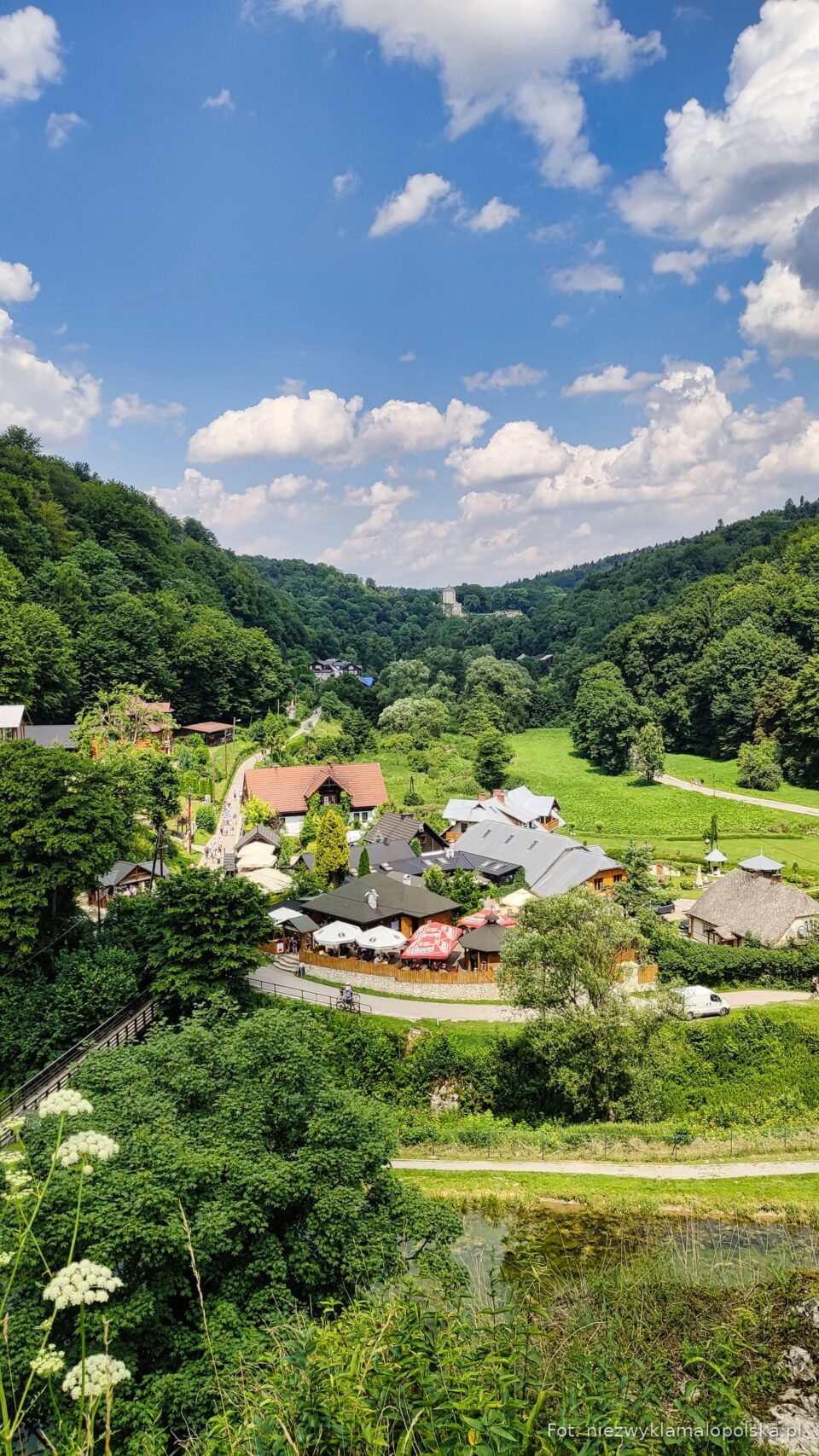
It’s right on the main road through the valley, about 300 metres from the car park in Ojców, so it’s an easy stop. Combine it with Łokietek’s Cave and its legend of the spider that saved a king, the castle ruins above the village, and Pieskowa Skała Castle further up the valley. Together they make a perfect day trip from Kraków.
Practical info
- Where: Ojców, on the main road towards Pieskowa Skała, about 300 m from the Ojców car park; about 25 km north of Kraków
- Sunday Masses: 8:00, 10:00 and 18:00; in October the evening Mass is at 16:00, and from November to the end of March there is no evening Mass
- Inside: usually open on Sundays and holidays between Masses; on other days you may only see it from outside
- Entry: free; entering Ojców National Park is free too (you only pay for the caves, the castle and exhibitions). Car parks in Ojców are paid
- Getting there: regional buses from Kraków take about an hour; check current times on jakdojade.pl or Google Maps
Checked October 2026. Mass times can change, so check the Ojców-Grodzisko parish website before your visit.
More guides: Kraków & Małopolska in English.
Łukasz, Niezwykła Małopolska