
Po polsku: Cerkiew greckokatolicka w Bartnem
Where else can you see a Baroque icon screen in a wooden church, then walk to a granary built of sandstone blocks and gravestones carved by local masters? Bartne is a small Lemko village in the Beskid Niski (Low Beskids), in the gmina (municipality) of Sękowa near Gorlice, in southern Małopolska. Its wooden church is one of the most valuable sacred monuments in the region, and it was restored in 2025.
The Lemkos are a highland people who lived in these hills. Their wooden churches are called cerkwie (singular: cerkiew). The church in Bartne stands in the middle of the village, on the slope of a hill. Local stonemasons were once well known here, and you can still see their work in the village.
One thing to know first: Bartne has two cerkwie, both dedicated to Saints Cosmas and Damian. This page is about the Greek Catholic one, which is now a museum.
History of the church
The church was probably built in the 18th century. In 1842 it was thoroughly rebuilt, and a date cut into the lintel above the door still reminds visitors of this.
Today the church is no longer used for worship. Together with the granary next to it, it belongs to the Muzeum Dwory Karwacjanów i Gładyszów w Gorlicach (Museum of the Karwacjan and Gładysz Manor Houses in Gorlice).
What it looks like
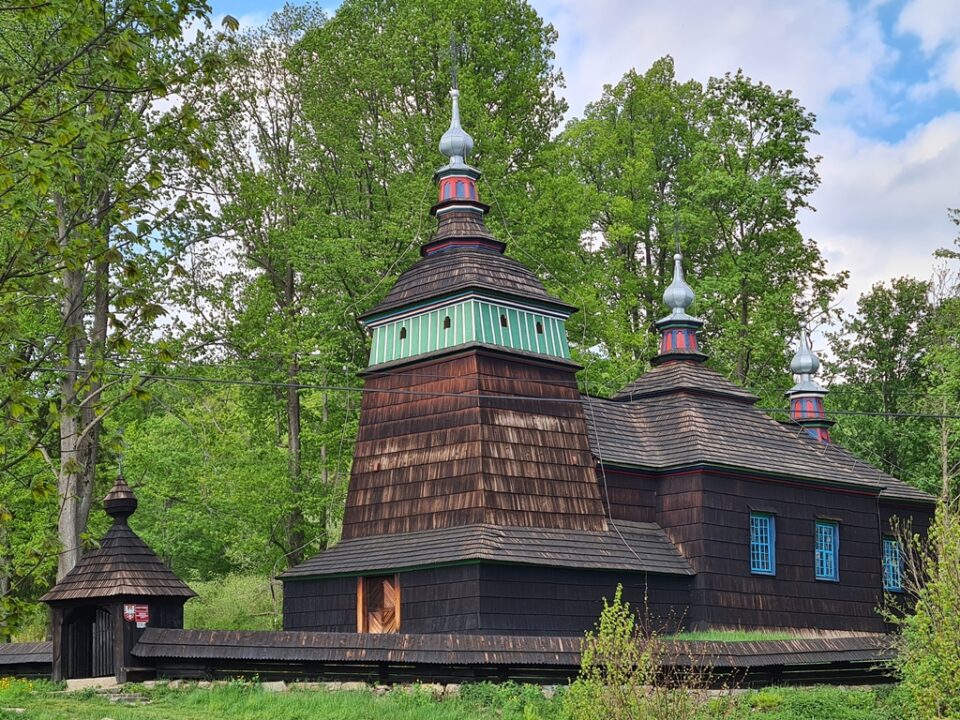
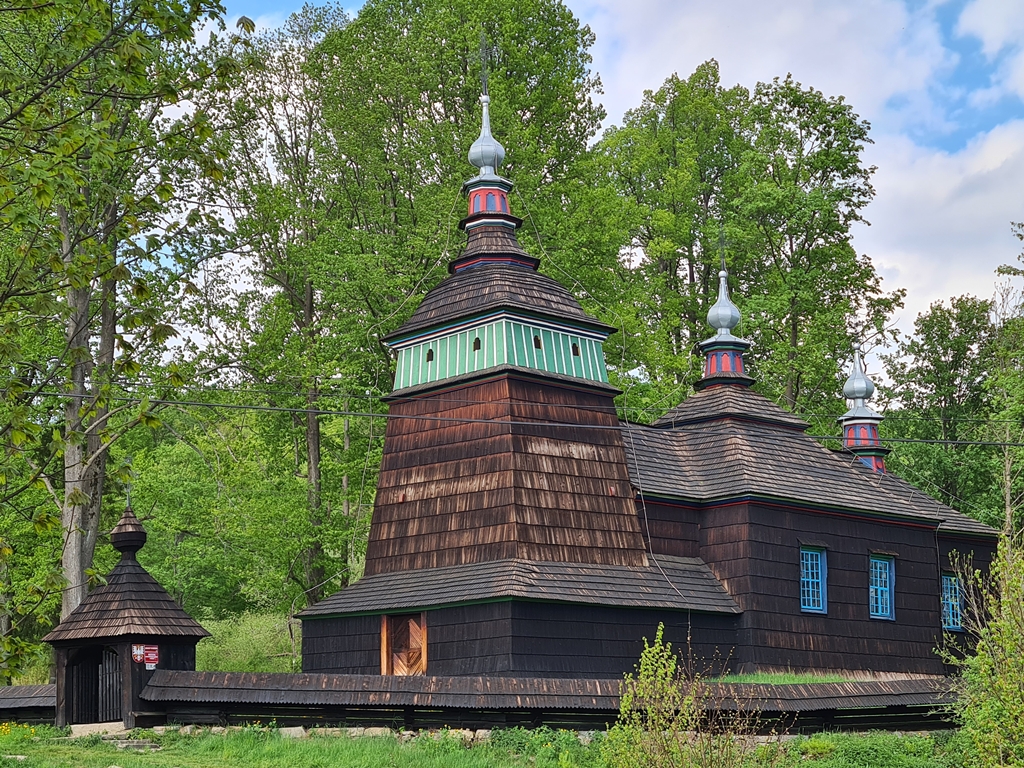
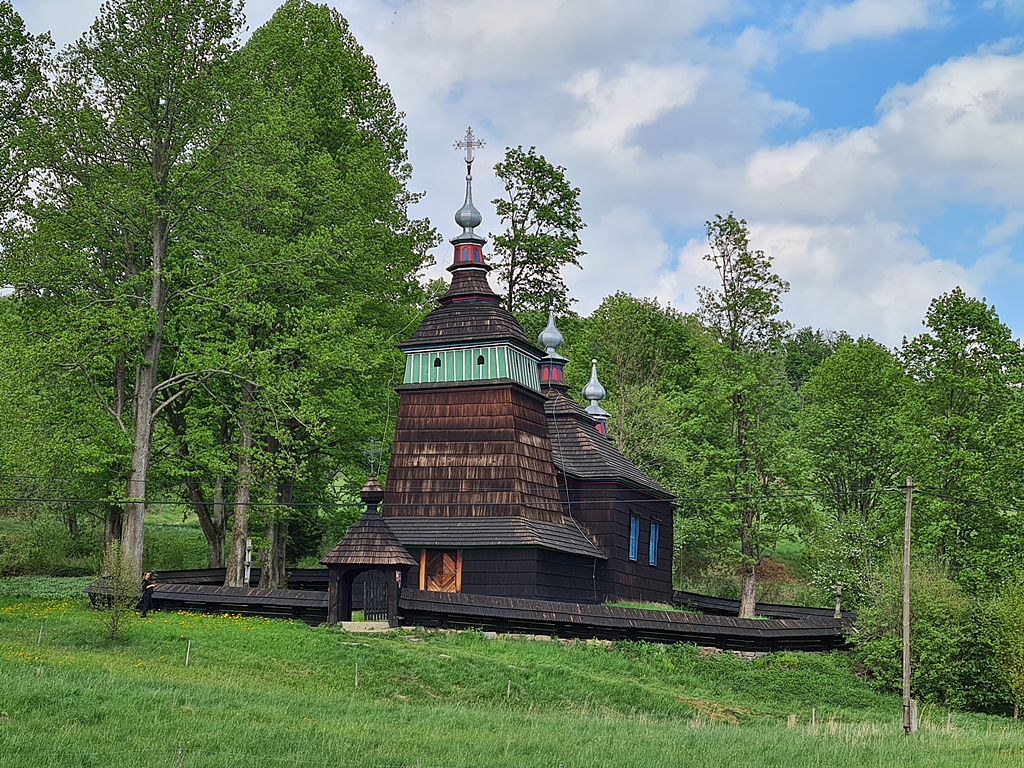
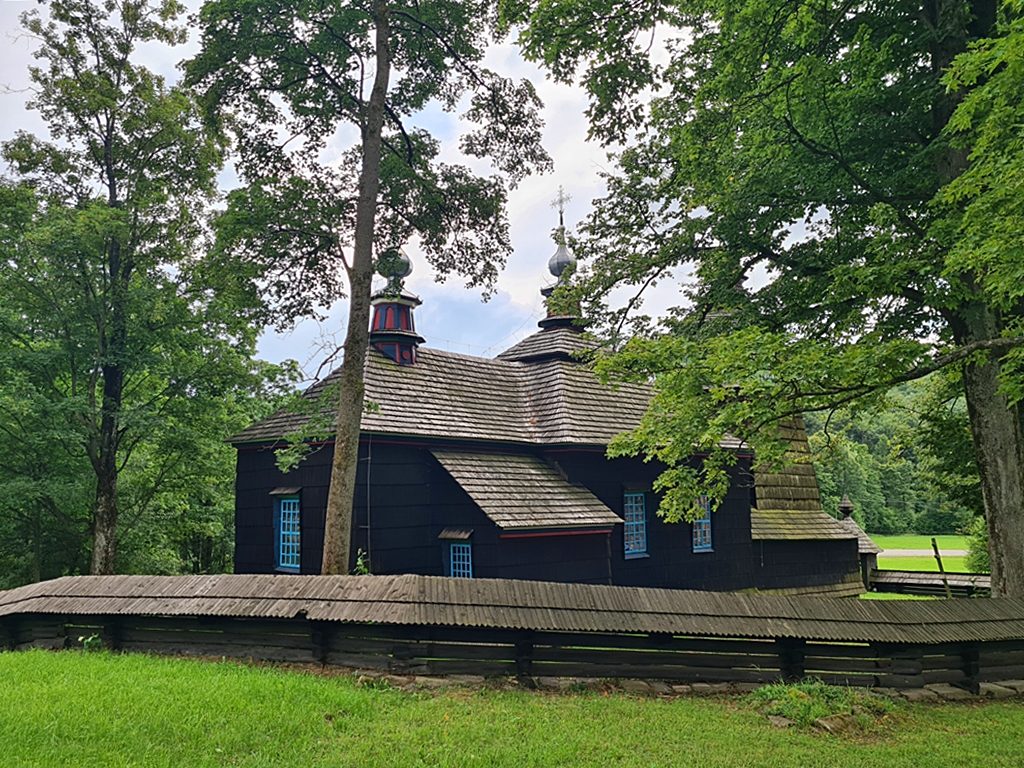
The church is built of fir wood in log construction (konstrukcja zrębowa). It has the traditional three-part layout: the sanctuary, the nave, and the prytwor, also called babiniec, which is the entrance vestibule.
On the west side stands a tower of post construction, with walls narrowing towards the top and a characteristic pseudoizbica (a decorative false-gallery detail). A skirt-like roof called a zachata runs around the lower part of the tower. A small sacristy is attached to the sanctuary.
The roofs are at different heights, and the tower is topped with a bulb-shaped dome. In the gables you can see blind lanterns with wrought-iron crosses. Everything is covered with wooden shingles.
The church is surrounded by a wooden fence with a small shingle roof. The entrance gate, also with a bulb-shaped top, most likely dates from the 1842 rebuilding.
The iconostasis and the interior
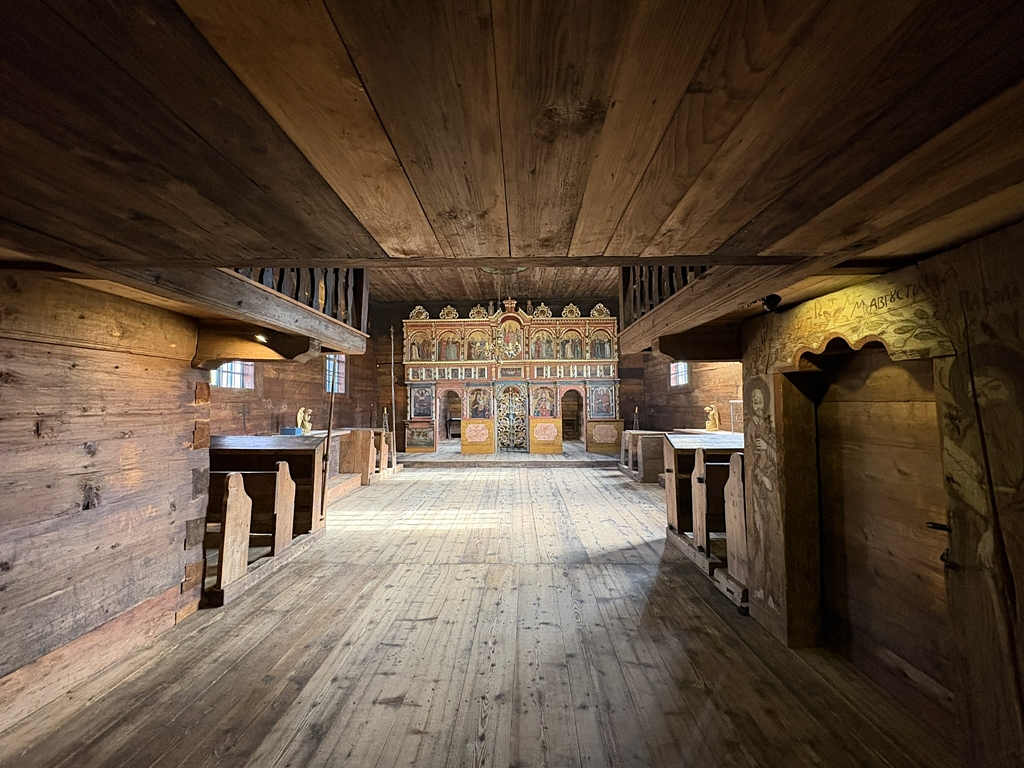
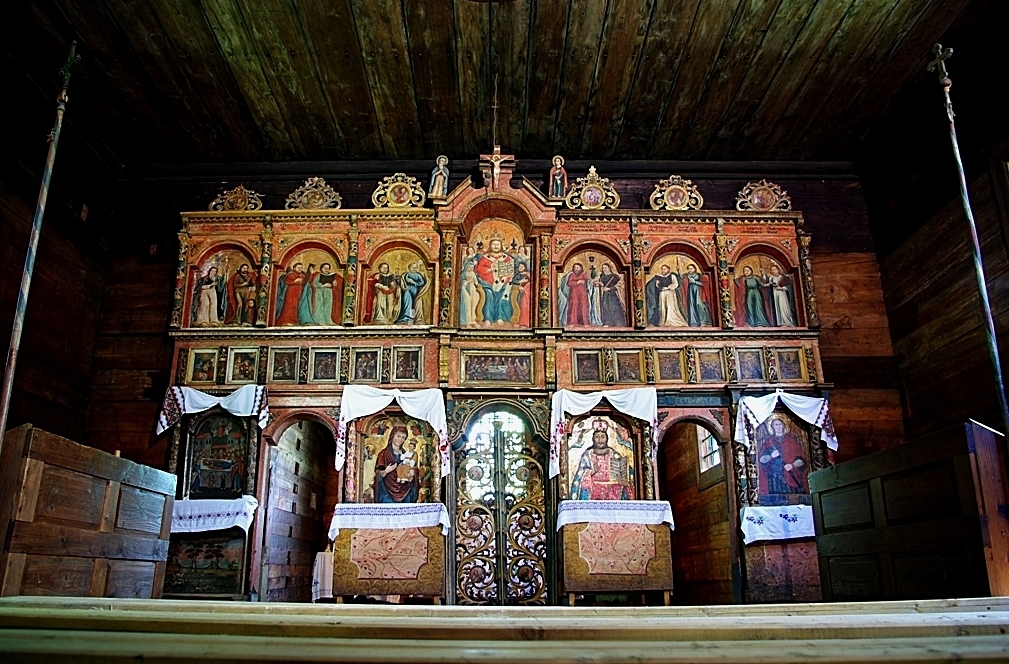
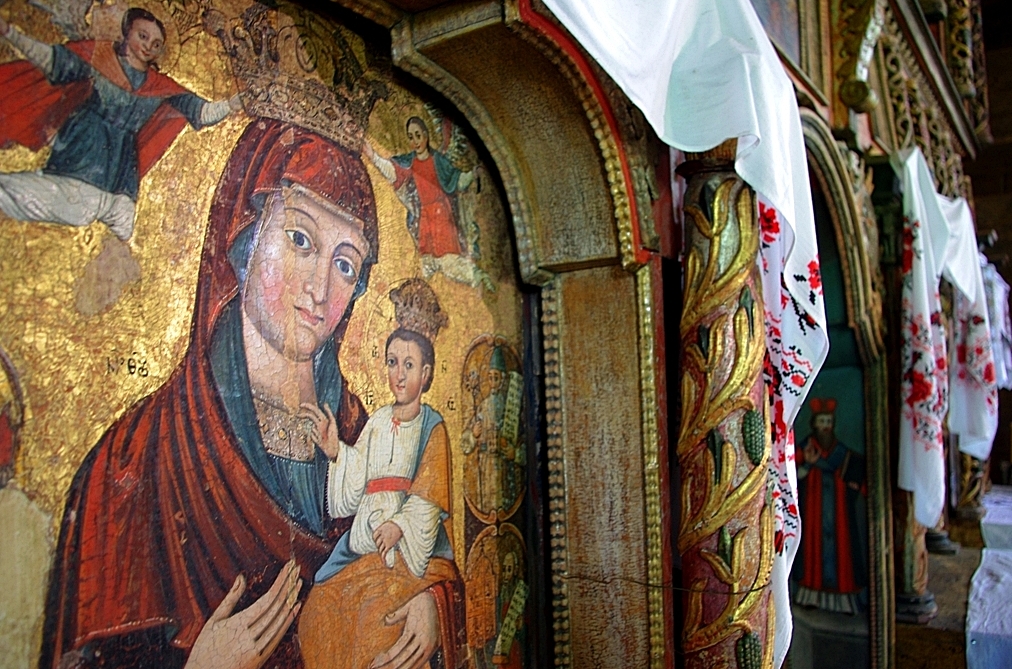
The greatest treasure inside is the multi-tiered Baroque ikonostas (icon screen) from the second half of the 18th century. It separates the altar area from the nave. It was most likely bought in another village after the church was repaired in the 19th century. It also contains older icons from the 17th century.
Only one icon is missing: the one showing the patron saints, Cosmas and Damian. Today it is in the Muzeum Zamek w Łańcucie (Castle Museum in Łańcut), and an icon of Archangel Michael takes its place.
The iconostasis was conserved in the 1970s and again in 2025. Also look for the altar from 1797, the choir gallery above the west part of the nave, and the portal and foundation beam moved here from a church in Nieznajowa that no longer exists.
The stone granary and the stonemasons’ gravestones
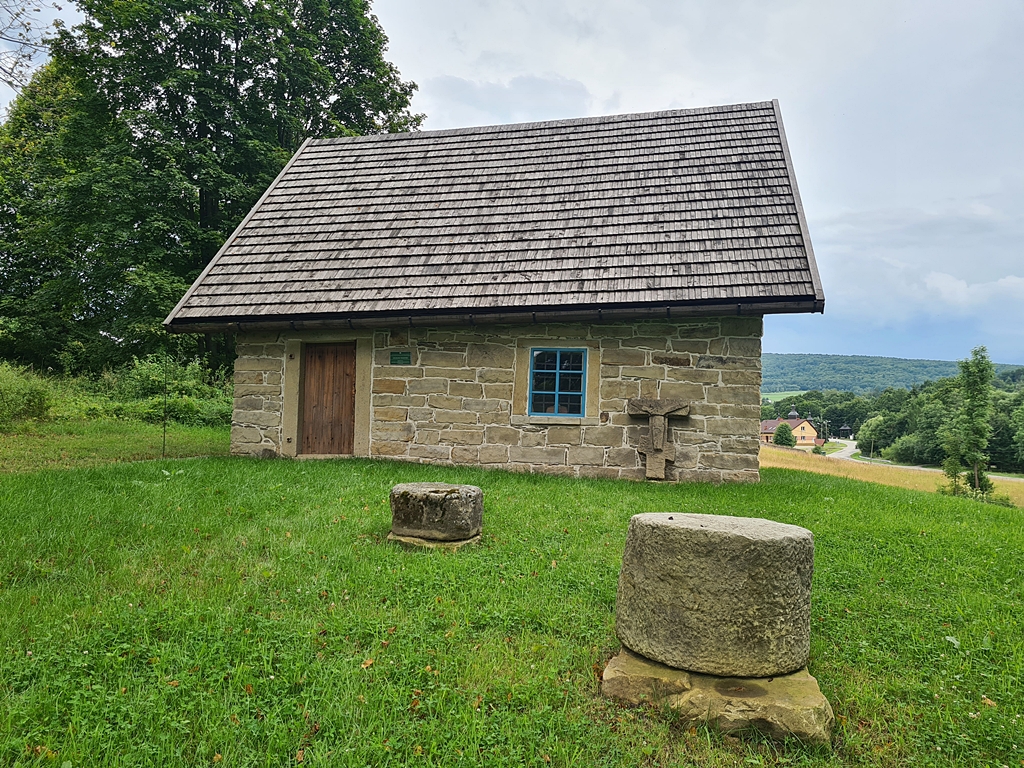
Just behind the fence stands a stone spichlerz plebański (parish granary) from the first half of the 19th century, built of sandstone blocks. It was renovated in 1966 and again in 2025. Today it houses an exhibition about stonemasonry, the craft Bartne was famous for.
One gravestone survives from the old cemetery next to the church. Not far from the church there is also a parish cemetery with original 19th-century gravestones, made by local stonemasons. I think it is worth a short visit while you are in the village.
Restoration in 2025
In 2025 comprehensive conservation work was carried out on the church’s furnishings: the iconostasis, the altar and the portal from Nieznajowa. The granary was also worked on. The project was called „Prace ratunkowe typu konserwatorskiego przy zabytkowej cerkwi greckokatolickiej i spichlerzu plebańskim w miejscowości Bartne” (emergency conservation work on the historic Greek Catholic church and parish granary in Bartne). It received funding from the Rządowy Program Odbudowy Zabytków (Government Programme for the Restoration of Historic Monuments).
My tip: the church is opened by arrangement, so phone ahead before you travel (details below).
Practical info
- Where: Bartne, gmina Sękowa (Gorlice county), Beskid Niski. The church stands in the central part of the village, on the slope of a hill.
- Please note: there are two churches of Saints Cosmas and Damian in Bartne. This page is about the Greek Catholic one, which is a museum building.
- Visiting: after prior notice by phone. Guide: Fr. Łukasz Kopcza, tel. 18 351 84 54 (check before your visit).
- Run by: Muzeum Dwory Karwacjanów i Gładyszów w Gorlicach, tel. 18 262 00 49.
- Nearby: the church of St Paraskeva in Kwiatoń (see my Kwiatoń guide), and the Zagroda Maziarska (tar-maker’s farmstead) in Łosie.
Checked October 2026. Opening times and prices change, so please check before your visit.
More guides: Kraków & Małopolska in English.
Łukasz, Niezwykła Małopolska